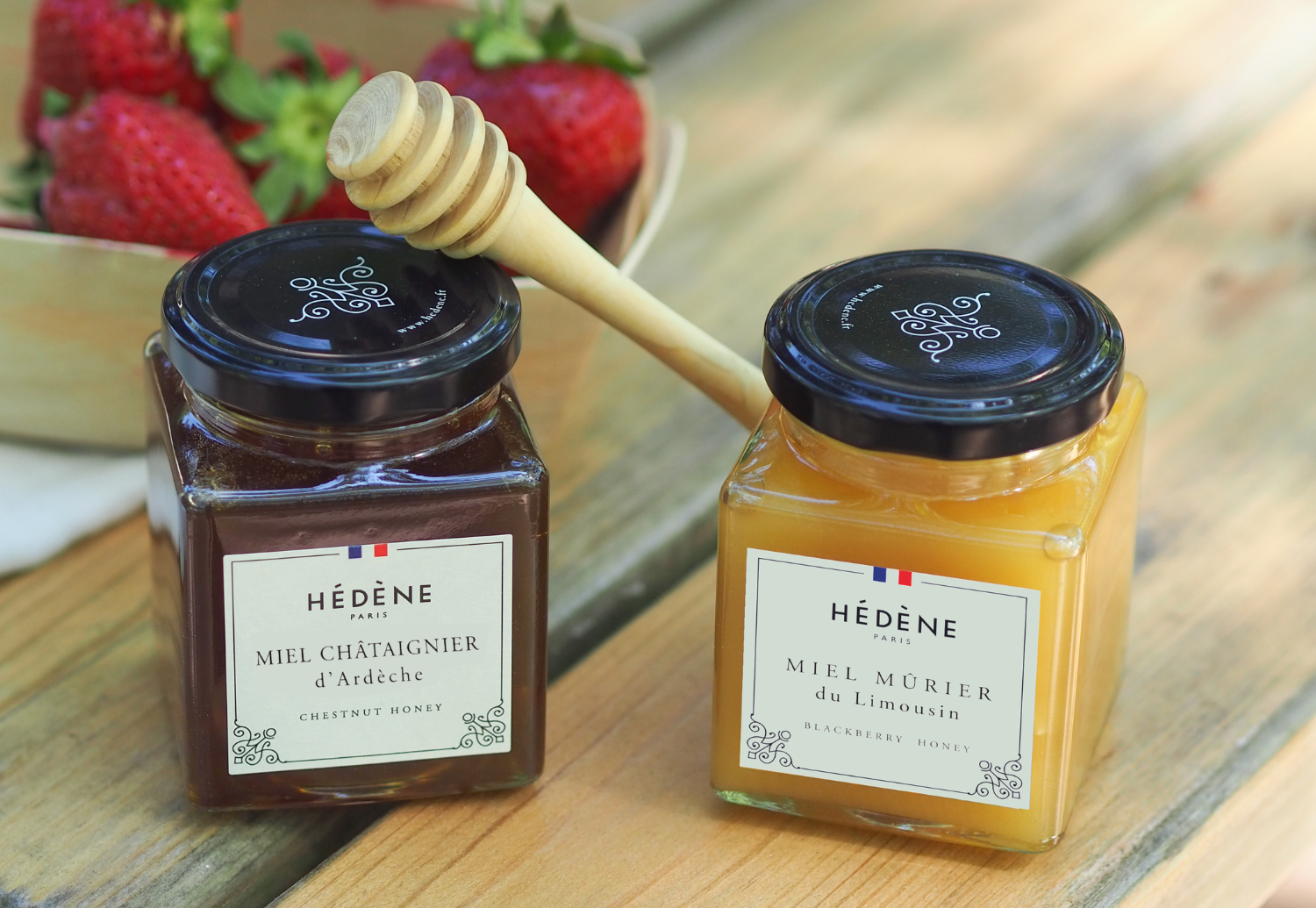
Around the world, there is a wide variety of honey: from Manuka honey to maple honey, including carrot, buckwheat, lavender, acacia, and chestnut honey. Each honey comes from a specific flower or floral source, foraged by the bee, and transformed in the hive from the flower's nectar. Light or dark in color, liquid or creamy in texture, sweet, fruity, or more pronounced in flavor: each type of honey has its own unique character.

Every day, nature surprises us with the richness of the honeys and honeydews it offers. Honey can be ideal for a dessert, a sweet or savory recipe, cakes, a meat dish, a sauce, or simply on toast for breakfast. Others are used for their health benefits, as a natural remedy for sore throats, or to improve overall health and support the immune system. Honey is a natural product, a food with numerous properties, prized in both cooking and natural medicine.

But faced with this vast array of honey types, a question arises: which honey should you choose? Monofloral or wildflower honey, organic or artisanal honey, French honey or honey from further afield, raw or filtered honey… The choice depends on your tastes, your needs, the intended use, and the quantity consumed. Origin of the honey, quality, label, certifications, texture, and taste: these are all essential criteria to avoid fraud and choose genuine honey.

In this article, we will explain how to choose honey, understand the different types of honey, their uses, and their benefits, in order to find the best honey or the honeys best suited to your consumption, your cooking, and your lifestyle. 

Understanding what honey really is (essential basics)

 We all consume honey, but do you know what it is? Yes, everyone knows that honey is produced by bees, but do you know how it gets to the jar we find in stores and how honey is harvested ? 

How do bees make honey?

We all consume honey, whether on toast for breakfast, in desserts, hot drinks, or simply by the spoonful. Yet, honey is much more than just a sweet treat. Honey is a natural product, the result of the bee's meticulous work, and its composition, origin, and floral source play a crucial role in choosing the right honey.

It all begins with flower nectar, collected by the bee from a specific plant, tree, or bloom, such as acacia, fir, sunflower, or chestnut. This nectar is transformed in the hive using the bee's natural enzymes and then enriched with pollen. The resulting honey contains primarily glucose and fructose, making it a popular natural sweetener in both cooking and natural medicine.

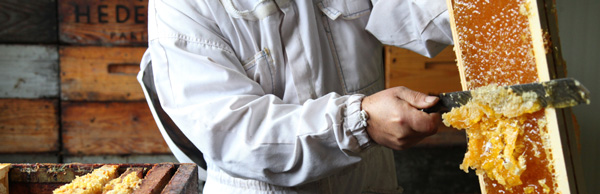
Once the nectar has been transformed, the bees fan the hive until it reaches the ideal consistency. When the honey is ready, it is harvested by the beekeeper and then jarred. Real honey, or raw honey, undergoes no excessive processing: it is not heated (unlike industrially produced honey in a bain-marie), retains its properties, its benefits, and its effects on health. This is where the difference between artisanal honey and mass-produced honey becomes clear. 

Why do honeys differ in taste, color, and texture?

Every honey is different, as it depends primarily on the flowers the bees have foraged. A monofloral honey (like acacia, thyme, or chestnut honey) expresses a very specific note, while a wildflower honey offers a more complex blend. The result: a honey whose taste varies from mild to fruity or pronounced, evolving on the palate depending on its origin.

Color and texture also vary. A light-colored honey is often lighter, while a dark honey reveals a more distinctive character. The consistency can be liquid or creamy, unrelated to quality: these differences are natural and part of the honey's life cycle.

These variations explain why honey is chosen according to its intended use: on bread, in cakes, in sauces, with goat cheese, or even for its health benefits, such as as a natural remedy for sore throats. Understanding these differences allows you to choose the ideal honey, according to your preferences and daily consumption. 

How to recognize quality honey? (reliable criteria)

With so many options available, recognizing quality honey can seem complicated. However, a few simple clues are all it takes to distinguish authentic honey from a processed product. By observing its origin, texture, and composition, it becomes easier to make an informed choice and opt for honey that truly reflects the work of the bees.

The importance of the origin of honey

The origin of honey is one of the first criteria to consider when judging its quality. It provides information about the place of production, the flowers foraged, and the harvesting methods used. Honey with a clearly indicated origin allows you to know exactly where it comes from and avoids dubious blends or products from multiple countries, which can sometimes be difficult to trace.

Choosing honey from France, or a local honey, means supporting production that is more respectful of bees and benefiting from a more rigorously controlled product. The origin also influences the taste, texture, and uses: mountain, lavender, or acacia honey will not have the same notes or consistency. Finally, a clearly identified origin is often a guarantee of transparency and helps limit the risk of fraud, which is common in the honey industry. Choosing honey knowing its origin is therefore a more informed choice, both for enjoyment and for peace of mind.

Quality labels (PDO, PGI, Organic, Label Rouge)

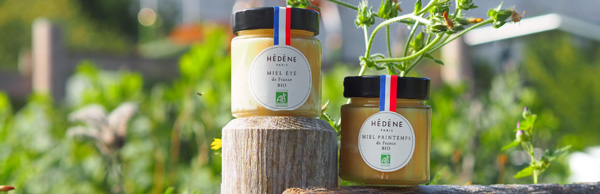
Quality labels are invaluable indicators for identifying reliable honey. A Protected Designation of Origin (PDO) or Protected Geographical Indication (PGI) guarantees a strong link between the honey, its terroir, and recognized expertise. The organic label ensures production methods that respect the environment and bees, without synthetic pesticides. The Label Rouge, for its part, highlights superior taste. While not essential, these labels offer real assurance and help make a more informed choice when buying honey.

Crystallization: a sign of quality

Contrary to popular belief, honey that crystallizes is not necessarily poor quality. It's a natural phenomenon, linked to its composition and floral origin. Over time, some honeys change from a liquid to a thicker or grainier texture without affecting their taste or health benefits. On the contrary, honey that crystallizes is often minimally processed and not overheated, a sign that it has retained its authentic nature. 

The different types of honey: varieties and characteristics

There is a wide variety of honeys, each with its own characteristics. Their difference stems primarily from their floral origin, that is, the flowers foraged by the bees. Some honeys come from a single plant and develop a very distinctive character, while others result from a blend of blooms and offer a more balanced range of aromas. Taste, color, texture, and uses in cooking or everyday life thus vary from one honey to another, allowing you to choose a honey according to your preferences and intended use. 

Where can I buy reliable honey?
Buying directly from a beekeeper remains one of the most reliable options. It ensures complete traceability, local honeys, and harvests that respect the seasons. Direct communication with the producer provides true transparency: the origin of the hives, the flowers foraged, and the harvesting practices. It's a reassuring choice for those who want to consume authentic honey and understand its journey from hive to jar.
Buy from organic or specialty stores
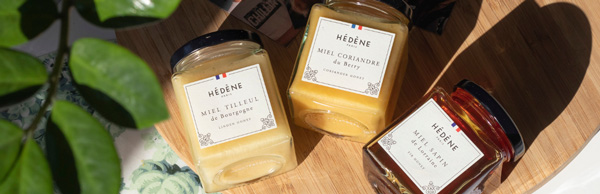
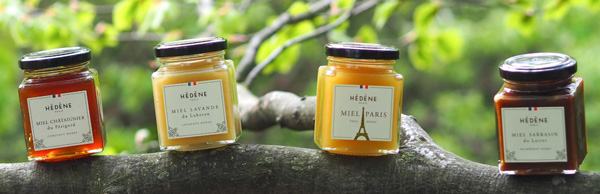
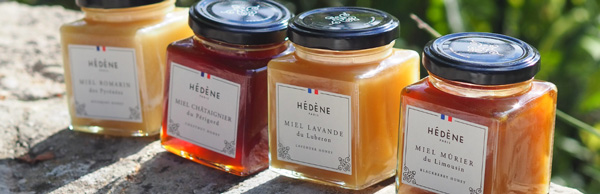
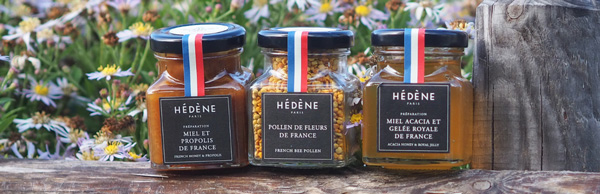
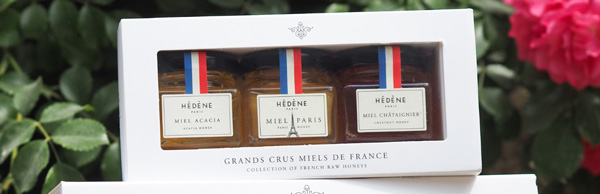
Organic stores and specialty shops generally offer a more discerning selection. The honeys they carry often come from committed, minimally processed, and better-documented supply chains. These outlets also offer greater guarantees thanks to the presence of recognized labels and detailed information. Furthermore, some specialist brands like Hédène, available at hedene.fr, highlight rigorously selected regional honeys, with particular attention paid to floral origin, beekeeping expertise, and taste.
How to choose honey in a supermarket?
Buying honey in a supermarket requires more vigilance, but it's still possible if you know how to read a label. It's advisable to avoid honeys with vague or overly general origins, as well as those with abnormally low prices. Reliable honey clearly indicates its origin, contains no added ingredients, and has a natural texture, even if this changes over time. The more precise the information, the more confidence you can have in the product. Certain premium brands, such as Hédène, or identified producers, are good indicators on the shelf.